
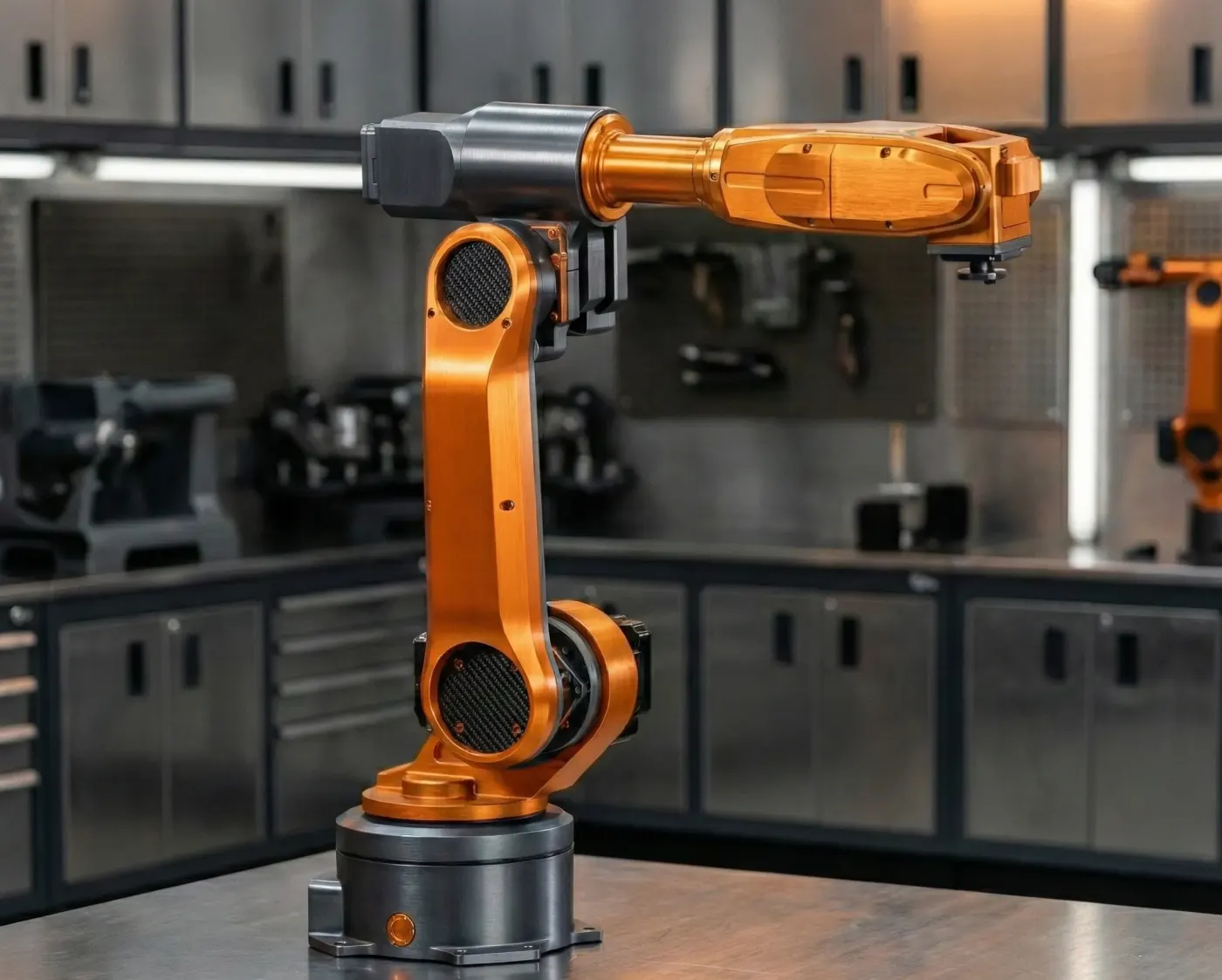
MiroMax Edge AI Kit
1 kg payload 6-axis desktop industrial robot with an edge-AI controller
What is it?
MiroMax is the most capable arm in the RoboxRise range: six axes driven by silent stepper motors through harmonic reducers with ≤1 arc-minute backlash, ±0.05 mm repeatability and a 1 kg rated payload. It supports manual drag-to-teach, collision detection and torque limiting.
It ships as an Edge AI Kit — a Raspberry Pi 5 (8 GB) control box running ROS 2, Python, PyTorch, TensorFlow Lite and OpenCV, an industrial USB camera, voice-recognition module, inductive and IR sensors, and a quick-change tool system with electric, magnetic, soft and suction grippers. A complete workcell version adds a conveyor, display, tower light and vision platform.
Who is it for?
Departments and programme levels this system is designed for.
- Mechatronics
- Robotics & Automation
- AI & Data Science
- CSE
- ECE
- Mechanical
- Production & Industrial
What can students learn?
Learning outcomes covered by the curriculum.
- Industrial robot programming: drag-to-teach, Blockly, Python, G-code
- ROS 2 robot control on an edge computer
- Deploying PyTorch / TensorFlow Lite models at the edge
- Vision-guided picking with an industrial camera
- Voice-controlled robot workflows
- Industrial I/O, sensors, Modbus TCP / RTU
- Quick-change tooling and end-effector selection
- Collision detection, torque limiting and safety functions
- Offline 3D simulation in WLKATA StudioX and RoboDK
What is included?
Hardware in the box, plus what RoboxRise delivers with it.
In the box
- MiroMax 6+1 axis robotic arm with integrated controller
- Robot Edge AI Control Box (Raspberry Pi 5, 8 GB)
- Electric parallel gripper (0–52 mm, 1–7.5 N)
- Electromagnetic gripper (2 kg)
- 3-finger soft gripper (Ø60 mm max)
- Suction cup end-effector + 3 pairs of cup heads (8 / 12 / 20 mm)
- Vacuum pump box
- Pen holder
- Voice-recognition module
- Manual quick-change tooling system
- 2 MP USB industrial vision camera
- Inductive proximity sensor
- Infrared photoelectric sensor
- User guide, operation manual, maintenance manual
- Cabling and power kit
Delivered by RoboxRise
- User guide, operation manual and maintenance manual with spare-parts list
- Instructor manual, student experiment manual and lab sheets (Workcell version)
- Faculty training (train-the-trainer)
- Installation and commissioning at your institution
- Technical support from India-based robotics engineers
- Defined warranty and spares support — terms in your quotation
Experiments
15 of the lab experiments students perform on this system.
- Drag-to-teach and playback
- Joint soft limits and workspace mapping
- Cartesian motion and G-code programming
- Python SDK control
- ROS 2 node control of the arm
- Edge-AI object detection with the USB camera
- Vision-guided pick-and-place
- Voice-command robot control
- Inductive / IR sensor triggered handling
- Modbus TCP control from a PLC or PC
- Electric gripper force and stroke tuning
- Magnetic and suction handling of mixed parts
- Quick-change tool workflow
- Collision detection and torque-limit study
- Conveyor sorting with tower-light statusWorkcell version
Grow your lab
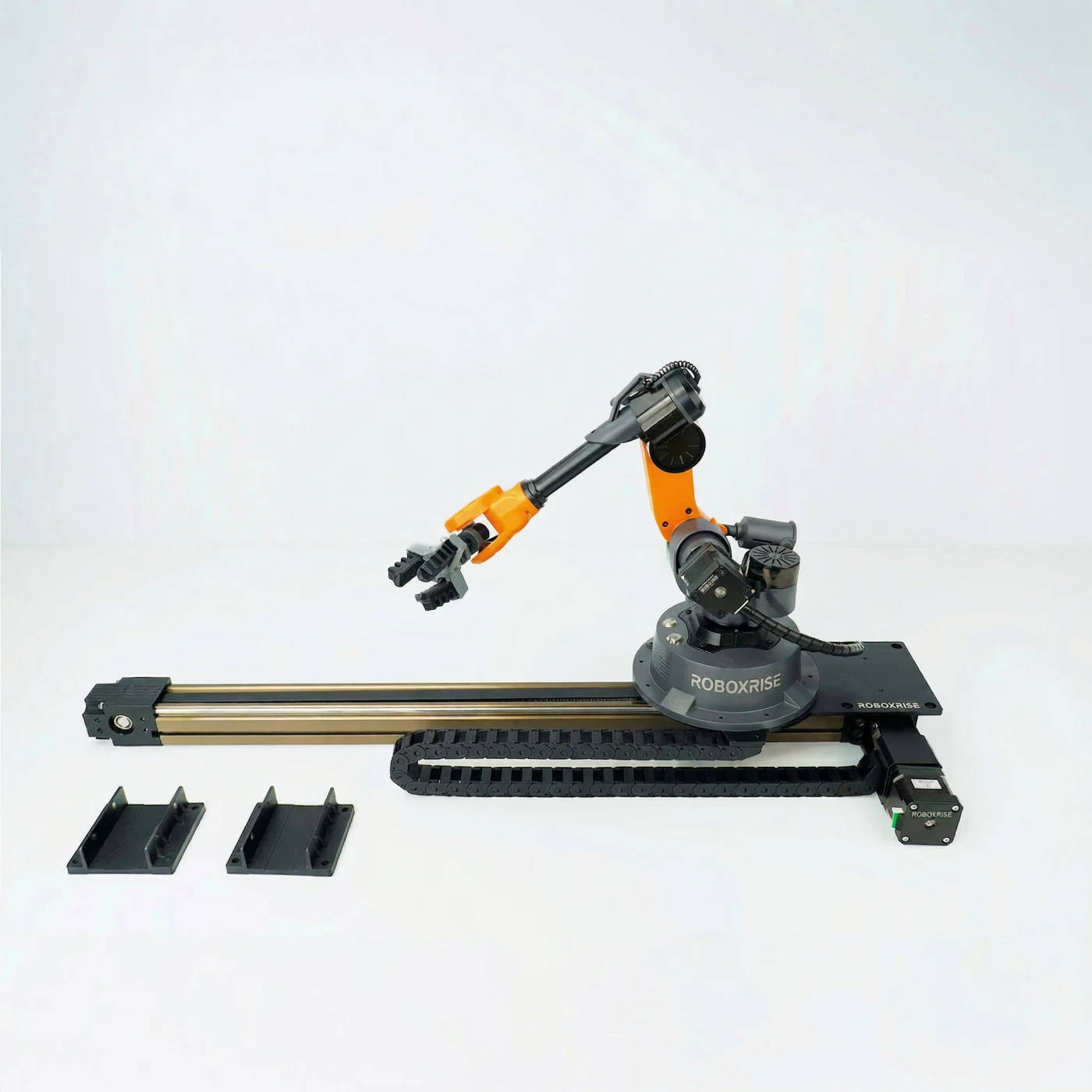
Compatible systems that connect directly to this one.
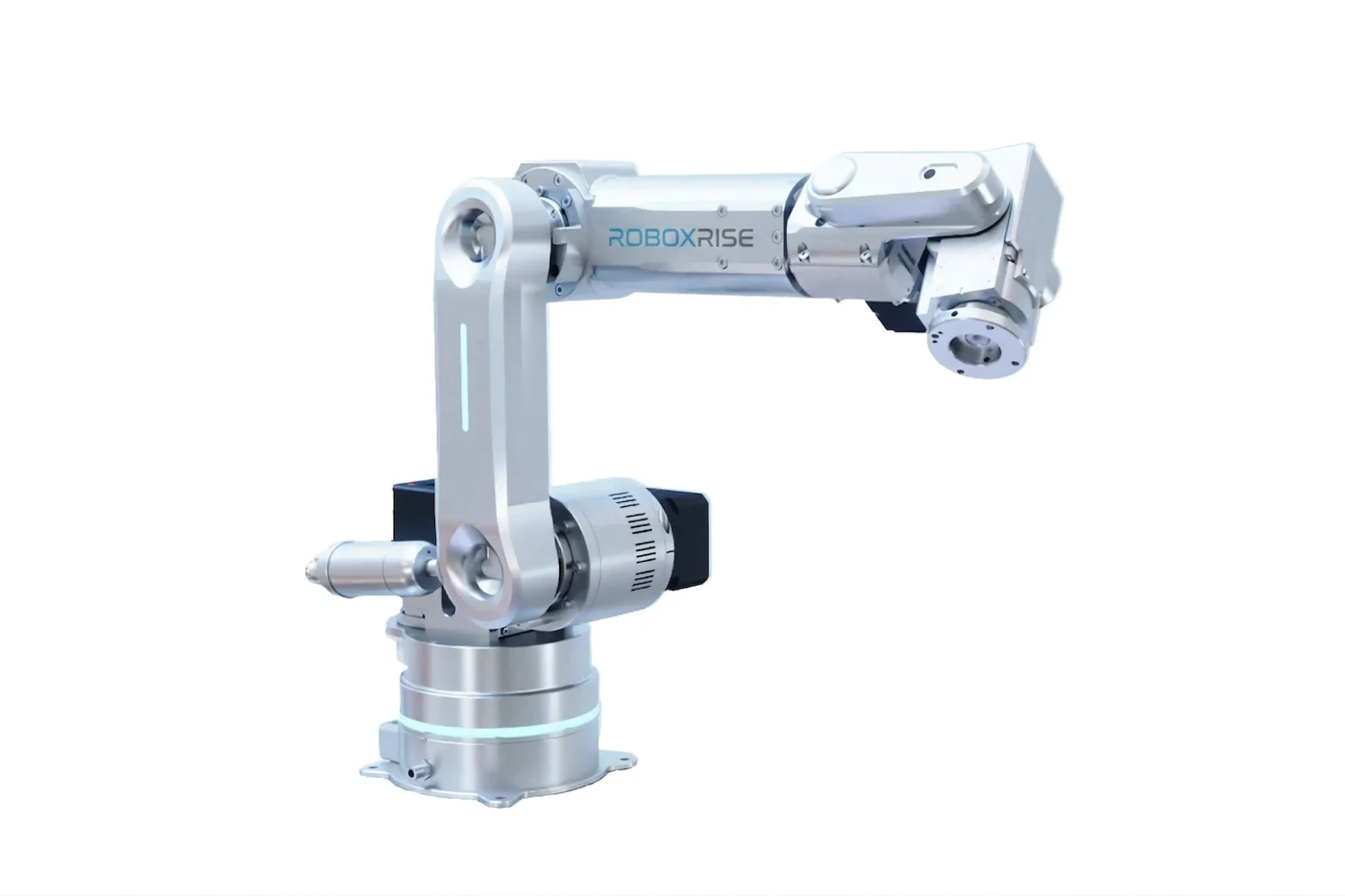
Technical specifications
| Axes | 6 + 1 external axis |
|---|---|
| Rated / max payload | 1000 g / 1500 g (near desktop) |
| Reach | 450 mm from flange · 400 mm from wrist |
| Repeatability | ±0.05 mm |
| Net weight | 4.5 kg (arm) |
| Joints | Silent stepper motors with harmonic reducers, ≤1 arc-min backlash |
| Material | Aluminium alloy |
| Communication | Ethernet, USB-C, UART, RS485, Modbus TCP / RTU, Wi-Fi, Bluetooth BLE |
| I/O | 2 × DI (24 V), 2 × DO (24 V, PWM), encoder / external axis, E-stop |
| Safety | E-stop, collision detection, torque limiting, over-current and short-circuit protection |
| Edge-AI controller | Raspberry Pi 5, 8 GB — ROS 2, Python, C++, PyTorch, TensorFlow Lite, OpenCV |
| Software | WLKATA LAB, WLKATA StudioX (multi-robot, offline 3D simulation) |
| SDK platforms | Python, Arduino, CoppeliaSim, RoboDK, MATLAB, Omniverse, ROS / ROS2, YOLOv5, OpenCV, C++ |
| Power | 100–240 V AC, 50/60 Hz · 60 W max |
| Protection | IP20 · operating −10 °C to 50 °C |
Specifications may vary by configuration. Your formal quotation lists the exact configuration supplied.
Warranty & support
All RoboxRise institutional systems are supplied with defined warranty, technical support and commissioning terms according to the selected configuration. Detailed commercial terms are provided with the formal quotation.
Questions
How is MiroMax different from Mirobot?
MiroMax carries four times the payload, has ±0.05 mm repeatability, harmonic-reducer joints, drag-to-teach, Ethernet / Modbus and an edge-AI computer. Mirobot is the better choice for a first teaching lab; MiroMax suits advanced and research labs.
Is there a complete workcell version?
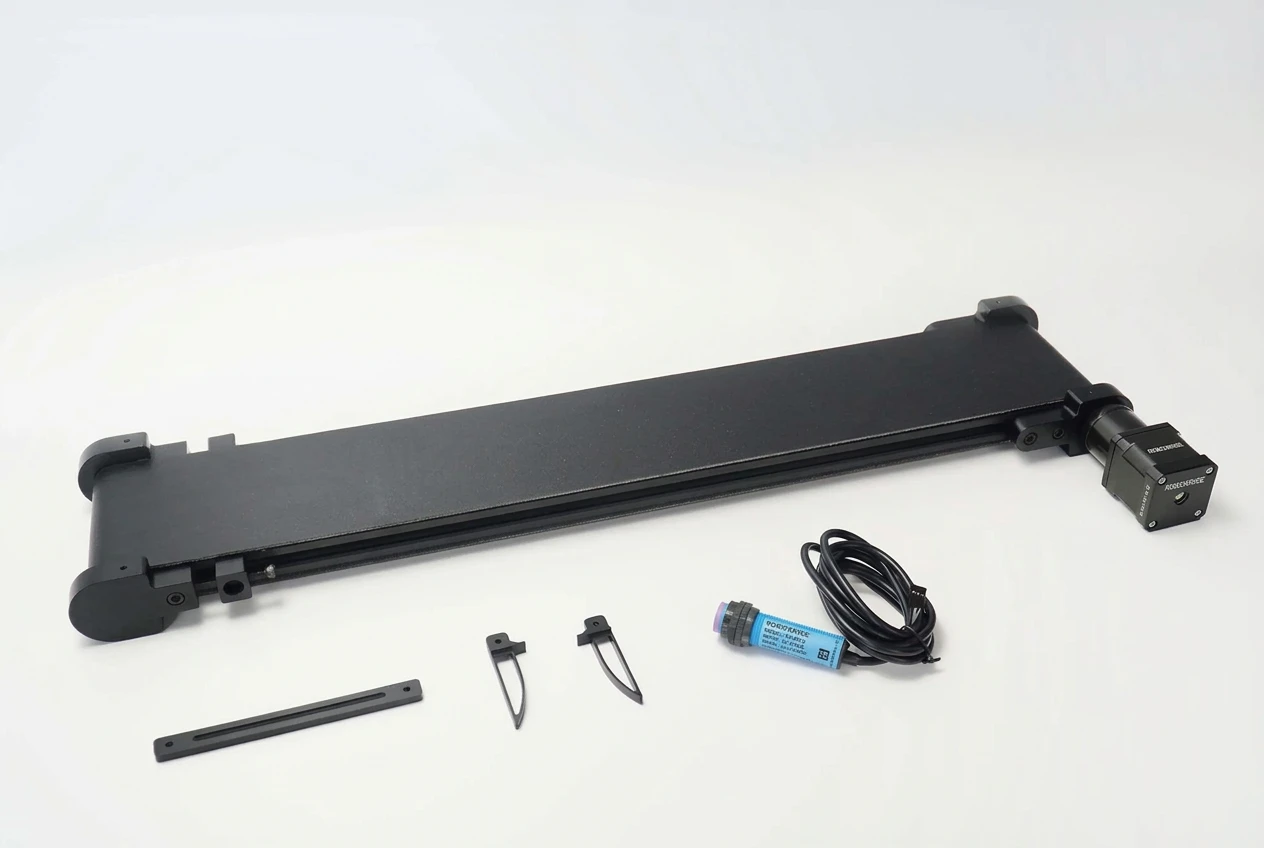
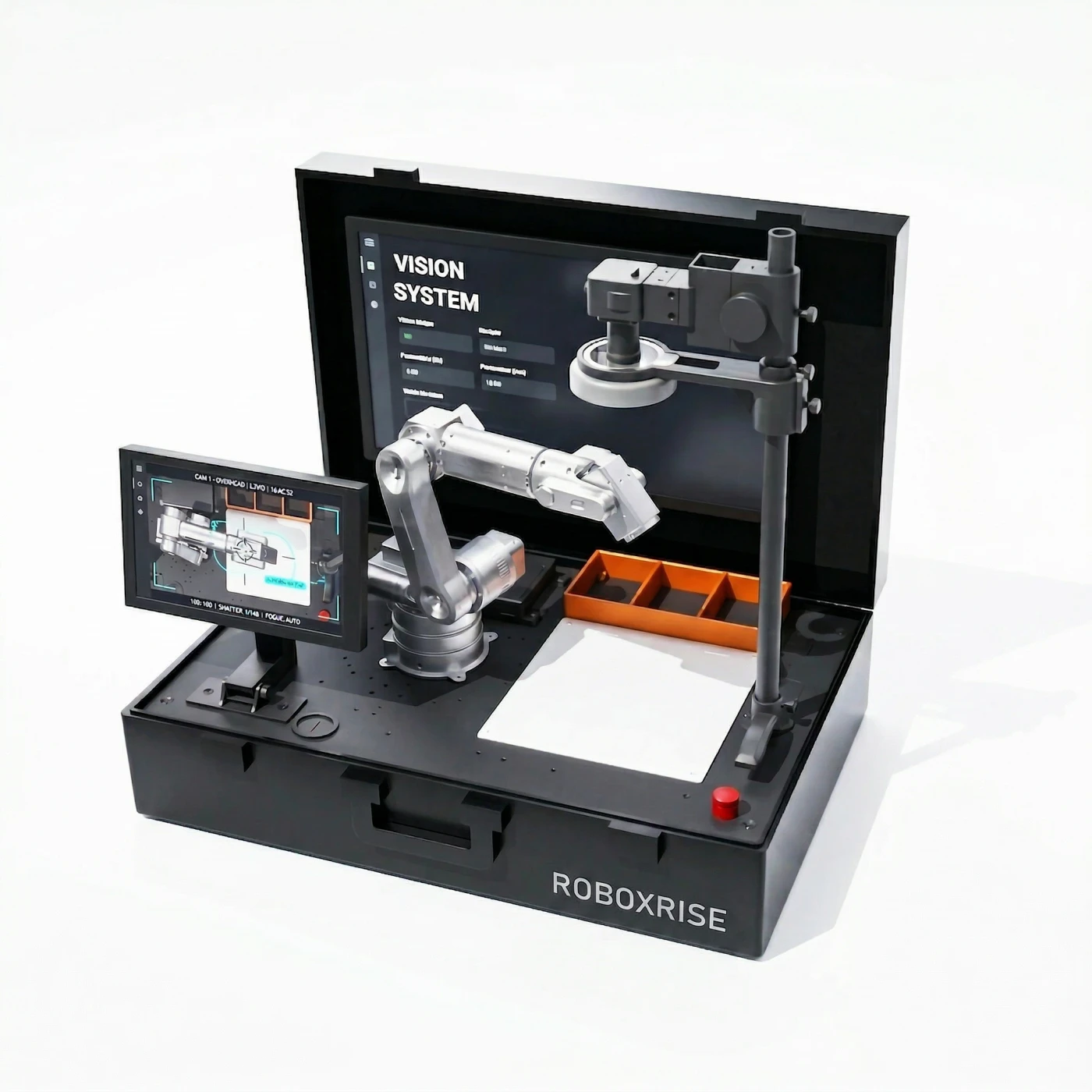
Yes. The MiroMax Edge AI Workcell adds an aluminium T-slot base plate, conveyor, feed chute, 10-inch display, tower light, vision calibration platform, test workpieces and full instructor and student manuals.
Does it work with ROS 2?
Yes. The Raspberry Pi 5 control box supports ROS 2 natively, alongside Python, C++, PyTorch, TensorFlow Lite and OpenCV.
Request a quote for MiroMax Edge AI Kit
Tell us about your institution and requirement. A robotics engineer — not a call centre — will call you back within one working day with a recommendation and a formal quotation.
- Call our robotics lab team+91 81200 07474
- WhatsAppChat with a robotics consultant
- Emailgunalan@r-tech.in
- HoursMon–Sat 9 AM–6 PM IST
Request Proposal
Fields marked * are required.